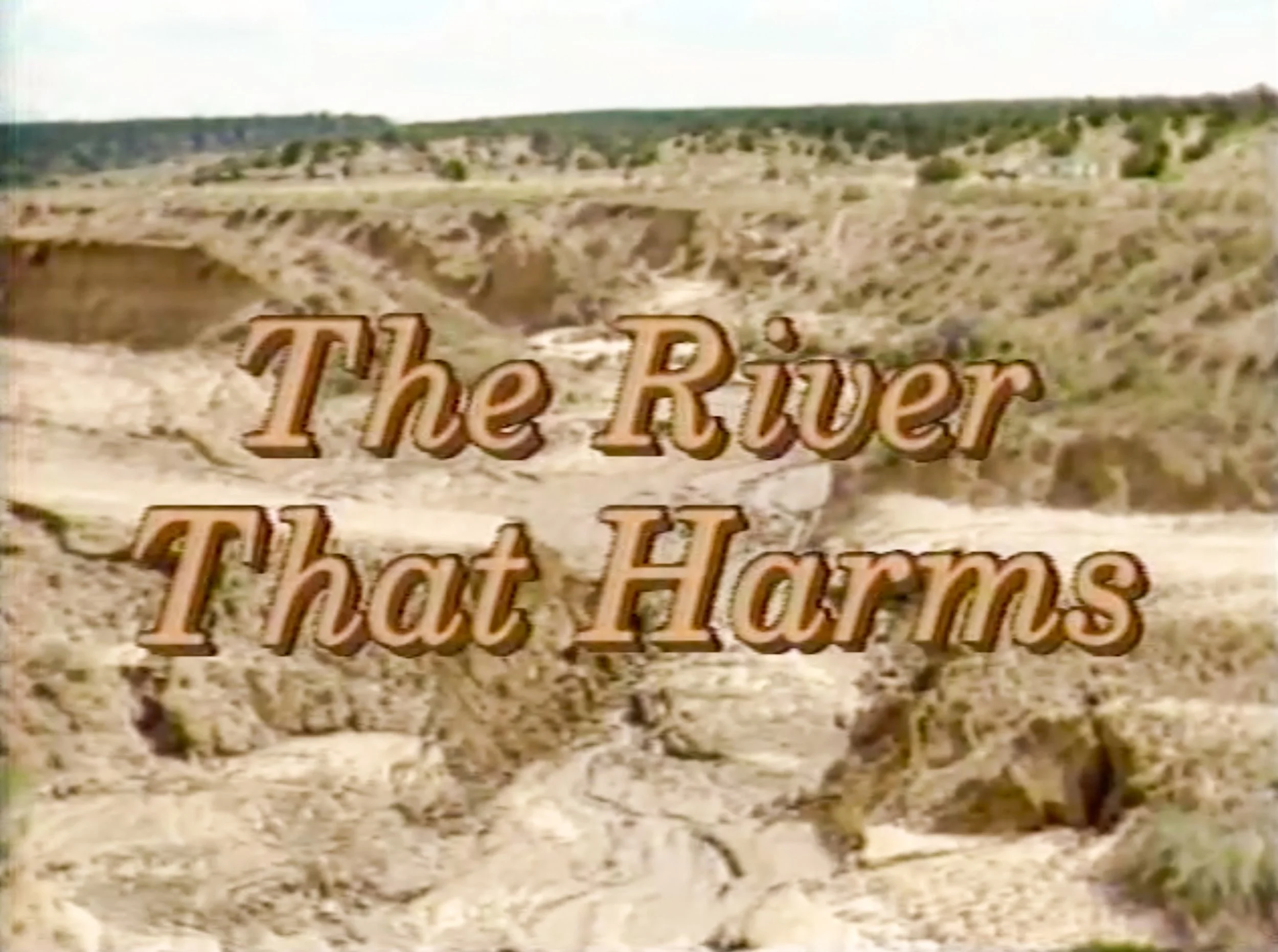
The River That Harms
45 minutes
Director: Colleen Ann Keane
Producer: Colleen Ann Keane
1987 | United States
Subjects: Indigenous Rights, Environmental Justice, Uranium Mining, Water Contamination, Diné Communities, American Southwest
The River That Harms documents the largest radioactive wastewater spill in United States history, a national tragedy that received little public attention.
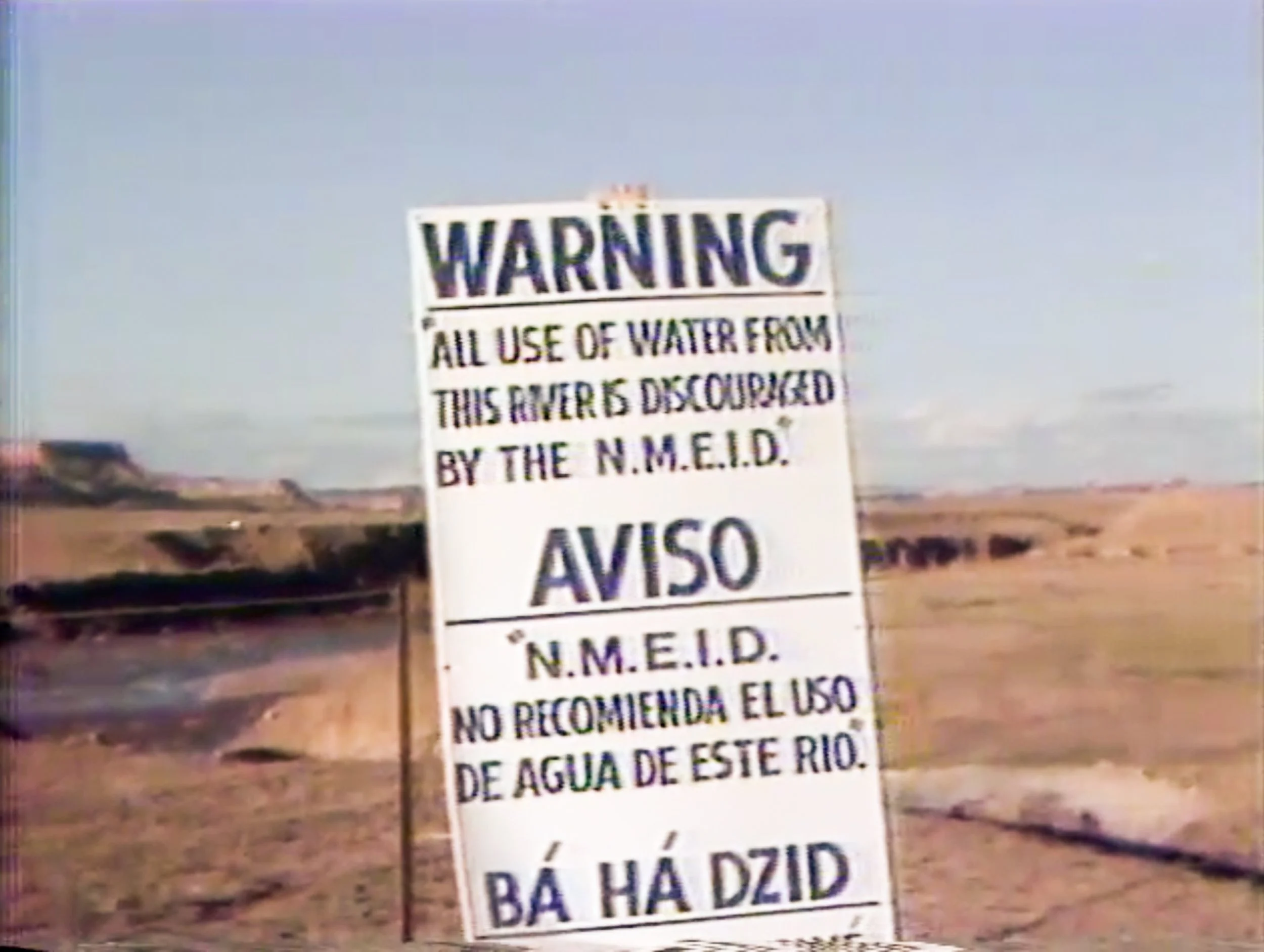
In 1979, a United Nuclear Corporation tailings dam at Church Rock, New Mexico, collapsed and released 94 million gallons of radioactive wastewater and uranium mill waste into the Rio Puerco. The contaminated water flowed through Diné communities where the river served as a vital source of water for families, livestock, and farmland before eventually feeding into the Rio Grande.
Unaware of the dangers, Diné ranchers, children, and animals continued to walk through and use the contaminated river water in the days following the spill. Through interviews, investigative reporting, and firsthand testimony, The River That Harms documents the devastating environmental and human consequences of uranium extraction on Navajo land and the lasting impact on affected communities.
The film remains an important historical document and an early work of investigative environmental justice filmmaking, preserving the voices and experiences of those directly impacted by the Church Rock uranium spill. More than four decades later, the events documented in the film continue to resonate as both a profound historical wound and an urgent warning about the ongoing consequences of nuclear extraction and environmental contamination.
The River That Harms has screened at the University of Southern California, The Uranium Film Festival of Window Rock, Arizona, and the Rio Grande Theatre in partnership with New Mexico State University.
An upcoming screening of the film will be shown at The National Hispanic Cultural Center in Albuquerque, NM on Sunday, October 4, 2026 at 1:30pm.
Watch the full film on Kanopy, Culture Unplugged or Alexander Street Video
The River That Harms, 1987 Documentary
The Making of The River That Harms
By Colleen Ann Keane
In 1979, I was working at the Diné Center for Human Development, the research and development arm of Navajo Community College, now called Diné College, located in the mountains of northern Arizona on the Navajo Reservation.
I was working on an Indian Child Welfare Act grant after the ICWA passed in 1978, mandating that Native children be returned to their tribes and families in child welfare cases.
My good friend, Lynn Olcott, was conducting a March of Dimes study on the impacts of an uncovered uranium tailings pile in Shiprock, New Mexico. Her research found an increase in birth defects while the pile remained uncovered.
In the midst of our work, the UNC spill occurred on the morning of July 16, 1979, releasing radioactive waste into the environment and raising immediate concerns about the long-term health impacts on Diné communities.
Unlike Three Mile Island, which had occurred just months earlier and received national attention, there was very little media coverage of Church Rock. State officials and the company claimed there were few people affected. That was not the case, as The River That Harms documents.
A few years later, while attending the University of Southern California School of Journalism broadcasting program, I was asked to write a documentary script for a class assignment. Outraged that the UNC spill had been largely ignored, I contacted Lynn Olcott, who connected me with Dr. Frank Dukepoo, Dr. Laura Shields, and Dr. Al Goodman — voices featured in The River That Harms discussing low-level radiation exposure and groundwater contamination.
At the time, many still believed there was a tolerable level of exposure to radioactive byproducts. Doctors Dukepoo and Shields were among the first to publicly argue that any exposure to radiation is harmful.
The script for The River That Harms was selected by the department for production, and although I had never directed before, I insisted on directing the film myself.
Filmed in 1983 and 1984 while attending the University of Southern California School of Journalism, The River That Harms was produced through a combination of university support and donated labor from students, professors, editors, and collaborators.